
The Intriguing Intersection of Espionage and Climate Change
18 Feb 2026
The Intriguing Intersection of Espionage and Climate Change
When we think of espionage, thrilling spy novels and dramatic film plots come to mind. However, the world of spying goes beyond clandestine missions and high-stakes international intrigues. It encompasses a layered history that has evolved with society’s shifting priorities, including today’s most pressing concern: climate change. The espionage landscape has morphed to address not only military and political secrets but also the vital issue of our planet’s rapidly changing environment.
For those of you who have read Blood in the Water (and if not, why are you reading my blog?!), you will know that the motivations of at least one of our villains was the impact of climate change and the lack of action being taken by world governments. Whereas Sophia Blanchet had a cruel streak to her plans to highlight this, however, recent history has been littered with environmental espionage. First, however, let us set the scene a little.
A Brief History of Espionage
Espionage has been a part of human civilisation for millennia. Ancient societies from Egypt to China utilised spies to gather intelligence on rival factions, securing their resources and strategic advantages. Fast forward to the medieval period, and we find kings sending forth agents to gather intelligence on the political maneuverings of other monarchs.
The modern era of espionage gained momentum during World War I and II, as nations realised the critical need for intelligence gathering in warfare. The establishment of organisations like the British Secret Intelligence Service (SIS) in 1909 and the American Office of Strategic Services (OSS) in 1942 marked significant developments in organised spying. Spies became storytellers, crafting narratives that shaped public perception, impacted diplomatic relations, and affected the course of history.
The Rise of Environmental Espionage
Fast forward to the 21st century, where the stakes have shifted quite dramatically. As the effects of climate change become more pronounced, a new landscape of spying has emerged, one that is focused not on military secrets, but on environmental intelligence. Nations gather information on each other's climate policies and resources to understand vulnerabilities and opportunities. The stakes are high, and the results of this espionage can be transformative.
For instance, software and data-driven espionage methods have been adopted to analyse and forecast changes in climate patterns, resource availability, and sustainable practices. Climate-related intelligence is increasingly pivotal, determining how governments respond to natural disasters, environmental policies, and international agreements like the Paris Accord.
The Sinking of the Rainbow Warrior: A Haunting Tale of Espionage
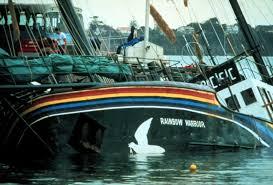
In the annals of protest and environmental activism, few events hold the same weight as the sinking of the Rainbow Warrior. On the night of July 10, 1985, in Auckland Harbour, New Zealand, a peaceful vessel met a tumultuous fate, forever altering the course of Greenpeace and the world’s perception of state-sponsored espionage.
The Rainbow Warrior was more than just a ship; it was the heart and soul of Greenpeace operations in the Pacific, a floating fortress against nuclear testing and environmental degradation. Its crew embodied a spirit of activism that resonated worldwide, inspiring countless individuals to join the struggle for Mother Earth. Yet, beneath the surface, dark currents were at play. The French government, anxious to silence the opposition against its nuclear testing in the South Pacific, was prepared to go to shocking lengths. Over the past few decades, the French had conducted over 200 nuclear tests in the South Pacific, acutely aware that they lacked a nuclear deterrent against the Soviet Union.
What happened next was a calculated act of sabotage orchestrated by the French intelligence service, the DGSE (Direction Générale de la Sécurité Extérieure). In a bid to eliminate what they perceived as a threat, operatives planted explosives on the vessel, resulting in its tragic sinking. The explosion not only claimed the life of Fernando Pereira, a skilled photographer and crew member, but also marked a grim turning point in international relations. A peaceful protest became the brutal reminder of how far governments might go to protect their interests.
The aftermath was a whirlwind of revelations and consequences. As the world learned of France’s involvement, public outrage mounted. New Zealand was not merely an unsuspecting victim; its sovereignty had been violated in a shocking act of state terrorism. The international community rallied behind Greenpeace, and the event propelled environmental issues into the mainstream dialogue like never before.
In the years that followed, the Rainbow Warrior became a powerful symbol, not just of resistance against environmental destruction, but also of the lengths to which powerful entities will go to suppress dissent. It ignited discussions on espionage ethics, activism, and human rights, emphasising that at the heart of every protest lies a tale worthy of attention and respect.
The Connection Between Espionage and Climate Policy
Climate change is a global issue, yet it operates through local laws, policies, and economies. Countries are keenly aware of the competitive advantage that comes with advanced knowledge of climate technology, resources, and strategies. For example, the espionage activities surrounding green technology innovations, including electric vehicles and alternative energy solutions, demonstrate how important environmental intel has become.
Data breaches and cyber-espionage targeting organisations like research institutions, universities, and private companies have become alarmingly common. Even public efforts aimed at climate activism and sustainability campaigns have not remained untouched by those who wish to manipulate or hinder progress for their benefit. This new dimension of espionage poses ethical questions about privacy, transparency, and the lengths to which countries will go in the face of a looming crisis.
The Future of Espionage in a Warming World
As climate change intensifies, so too will the focus of espionage. It’s clear that understanding environmental threats is now as vital as military strategies were in earlier centuries. The interplay between nations regarding resource management, such as water rights, arable land, and energy supplies, will likely dictate the shape of future conflicts.
In conclusion, the history of espionage has not only provided us with thrilling tales of intrigue but has also adapted to address the pressing challenges of modern times, particularly climate change. As we move forward, the roles of spies may expand beyond traditional realms, becoming vital players in the quest for sustainability and environmental responsibility. This convergence of spycraft and climate vigilance illustrates not only the versatility of espionage but also its profound impact on shaping a more resilient future for our planet.