Exploring the Majestic Castles of Wales: A Journey Through History and Architecture
21 Sept 2026
For those of you who don't know by now, I love Wales! I also love castles and as part of my university degree I spent a long weekend travelling around the country to view the most impressive fortifications. Wales is a land of enchanting landscapes, rich mythology, and a history steeped in tales of valour and conquest. At the heart of this legacy stands the iconic castles constructed during the reign of Edward I, which not only tell the story of a turbulent period in Welsh history but also showcase some of the most remarkable architecture in the UK.
The Historical Context
In the late 13th century, King Edward I of England set out on a campaign to conquer Wales, and in doing so, initiated one of the most ambitious castle-building projects in medieval history. With an aim to assert dominance over the local populace and safeguard the newly acquired territory, Edward commissioned a series of imposing castles that would become symbols of his power. The most notable among these are Caernarfon, Conwy, and Harlech, each building not just a defensive stronghold but also a statement of royal authority. They were known as Edward's Ring of Iron, a chain of fortifications designed to subjugate the natives after the death of arguably the last truly independent Prince of Wales, Llywelyn ap Gruffudd.
Caernarfon Castle: The Symbol of Power
Beginning with Caernarfon Castle, this UNESCO World Heritage site is often regarded as one of the most impressive castles in Wales. Its massive walls, adorned with a striking combination of grey and yellow stone, reflect the strength of Edward’s architectural vision. Built between 1283 and 1330, the castle features a distinctive polygonal design and was intended to emulate the walls of Constantinople. Caernarfon was also the site of the investiture of the Prince of Wales, beginning with Edward's son, a tradition that continues to this day, solidifying its status as a symbol of Welsh identity.
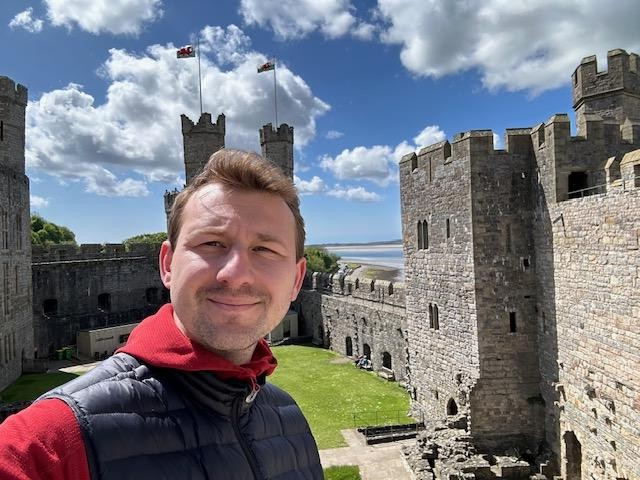
I have twice visited Cernarfon and thoroughly enjoyed both of my trips. Immediately the parallels to the Roman past are obvious through the architecture but also when you study the history of the area. The castle is situated close to Segontium, a Roman fort founded by Agricola, who was the Roman general largely responsible for the conquest of Britain (despite what Julius Cesar might have had people believe). Despite the costs of Edward's Iron Ring being ruinous for the English crown and its' bloodied history, those taking care of the castle today have done plenty to exentuate the history to everyone. I would throughly recommend a walk through the courtyard and within the castle walls, as well as a trip to the Hole in the Wall pub if you can squeeze in!
Conwy Castle: A Marvel of Medieval Design
Just a short journey from Caernarfon lies Conwy Castle, another exquisite example of Edward I’s architectural prowess. Completed in 1287, Conwy boasts eight massive towers and a breathtakingly well-preserved curtain wall, which carefully harmonises with the surrounding landscape and the adjacent town of Conwy. The town walls themselves were built in conjunction with the castle and provide a superbely preserved unique example of a walled castle town.
The castle’s design incorporates natural rocky outcrops, demonstrating a keen understanding of battlefield strategy and beauty. Walking along its ramparts offers panoramic views of the Conwy Estuary and Snowdonia, reminding visitors of the castle's strategic importance. Perhaps it was that glimpse of Snowdonia which inspired me to climb it years later!
Harlech Castle: The Strength Against Siege
Next on my journey was Harlech Castle, perched dramatically atop a cliff in Snowdonia National Park. This fortress is characterised by its circular towers and deep ditch, which were impressive feats of military engineering. Constructed between 1283 and 1290, Harlech became notorious for its resilience during the Welsh Wars. It famously withstood a protracted siege during the Wars of the Roses, further solidifying its reputation as a stronghold of defiance. You will have noted each of these castles had their own unique characteristics which makes each of them a worthwhile visit.
Beaumaris Castle: The Mother of Wales
No tour of Edward's Iron Ring would be complete without a trip to Anglesey. Edward I's conduct on the island was typical of the ruthless nature he exhibited in stamping his authority on his newly conquered territories in Wales and attempting to do the same in Scotland. Edward wasn't just a castle builder. He wasn't an ordinary medieval king. Edward understood the natives more than his nobles and his predecessors. It wasn't enough to simply build an intimidating fortification. As with Conwy, he displayed a cunning that destroyed centuries of Welsh culture by creating English towns to sit alongside or within the strongholds he built.
The island of Anglesey, or Ynys Môn, had long held a special place in Welsh hearts. Due to its mild climate and fertile fields, it was dubbed the ‘bread basket of Wales’ and helped to sustain the nation and support its independence. More fondly it was referred to as the Mother of Wales. At a single stroke, Edward crushed those centuries of history. Beaumaris was the final link in the great chain of Edward’s castles stretching along the north Wales coast. By the time of his death, however, the funds had begun to dry up and Beaumaris was never quite finished to Edward's vision.
The wall walks at Beaumaris represent a fascinating aspect of the castle and offer a perspective of the surrounding countryside which show why it was the perfect location for a fortress. On the northern side, the Llanfaes gate was likely never completed. The gate next to the sea, on the other hand, preserves evidence to this day of the stout wooden doors and gruesome murder holes which characterised medieval castles.
Architectural Ingenuity
The architectural features of Edward I’s castles reveal much about the military technologies of the time. The use of arrow slits for defense, impressive gatehouses, and staggering height made these castellas formidable. Notably, the castles often incorporated local building materials and styles, showcasing the influence of Welsh architecture. Archways, defensive walls, and elaborate ornamentation not only served a practical purpose but also enhanced the aesthetic appeal of the structures, which stand even today as testaments to the craftsmanship of medieval builders.
A Journey of Discovery
Visiting these majestic structures offers a unique insight into the historical narrative of Wales and the architectural brilliance of the medieval period. Each castle tells a story – not just of warfare and conquest, but of culture, identity, and the enduring spirit of the Welsh people. Despite my obvious bias, however, I am going to upset some of my Welsh relatives in my admiration for Edward I. I am prone to a rather scathing and cynical view of many of England's medieval kings, but Edward possessed a relentless will and political savvy not inherent in those that preceded or followed him.
Whether you're an avid history buff, an architecture enthusiast, or simply someone looking to immerse themselves in the breathtaking scenery of Wales, the castles of Edward I must not be missed. They are more than just remnants of a bygone era; they are vibrant pieces of history that continue to inspire awe and admiration.
As you plan your adventure in this enchanting land, consider exploring the rich tapestry of stories woven into the stone walls of these legendary castles. Your journey through the ages awaits!